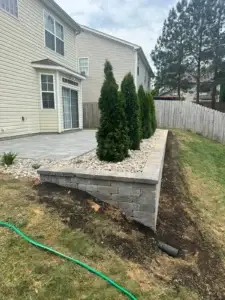
A sloped yard can be one of the most attractive features of a property, offering natural views and visual interest. It can also be one of the most challenging. Every time it rains, water moves downhill and carries soil with it. Over months and years, that steady loss can expose roots, undermine patios and walkways, create gullies, and push sediment into places it was never meant to go. For homeowners in Angier, Raleigh, Cary, Apex, Durham, and the wider Triangle area, where heavy summer storms and clay-rich soil are common, erosion is a real concern on any property with a grade.
At Mauricio’s Landscaping LLC, we’ve spent 17 years building retaining walls, patios, walkways, and drainage systems throughout central North Carolina. Here’s how retaining walls help stop erosion, how to design them so they work, and what else belongs in a complete slope solution.
Why Sloped Properties Erode in the Triangle Area
Understanding what drives erosion makes it easier to choose the right fix. Several local factors combine to make slopes vulnerable.
- Intense rainfall. Summer thunderstorms and tropical systems can deliver a lot of water in a short time. When rain falls faster than soil can absorb it, the excess runs across the surface and carries soil with it.
- Clay-heavy soil. Much of the Piedmont region has clay soil, which absorbs water slowly. That means more runoff, and saturated clay is heavier and more prone to slumping on a slope.
- Bare or thin ground cover. Grass, plants, and mulch slow water and hold soil in place with their roots. Slopes that are bare, thinly planted, or mowed too short lose that protection quickly.
- Concentrated water flow. Roof downspouts, driveways, and paved areas gather water and release it in one spot. That concentrated flow cuts channels into the slope far faster than gentle, spread-out rainfall.
- Disturbed soil. Construction, grading, and landscaping work loosen soil and remove vegetation. Until the ground is stabilized, newly disturbed slopes are especially vulnerable.
How Retaining Walls Stop Erosion
A retaining wall does more than hold back dirt. When it’s designed and built correctly, it changes how a slope behaves by creating level areas and controlling water.
- They hold soil in place. A structural wall takes the place of a steep, unstable slope with a firm vertical edge, so the soil behind it stays where it belongs.
- They reduce the steepness of the slope. Breaking one long slope into shorter sections slows water moving downhill, which reduces its power to carry soil away.
- They create usable, stable ground. Level areas behind a wall can become planting beds, lawn, patio space, or a garden, which gives you stable, productive ground in place of a hillside that keeps washing out.
- They give water a managed path. A well-built wall includes drainage behind it, so water is collected and sent where you want it instead of building up pressure or running unchecked down the slope.
- They protect what’s below. Walks, patios, driveways, and structures at the bottom of a slope are safeguarded from soil and water that would otherwise wash onto them.
Designing a Wall That Works on a Slope
The most effective erosion-control walls are built around the specific conditions of the property. A few design decisions make the biggest difference.
- Choose the right height and layout. Walls should be sized for the grade they’re holding. Taller slopes are often better served by two or more shorter walls than by a single tall one. This approach, often called terracing, spreads the load and creates planting shelves between levels.
- Select appropriate materials. Interlocking concrete block, natural stone, and similar systems are widely used for residential retaining walls, and each has its own strengths. The choice depends on height, soil conditions, appearance, and budget.
- Build a solid base. The first course of block should be set in an excavated trench on a compacted gravel footing, not directly on soil. A strong base keeps the wall level and prevents it from shifting under pressure.
- Use proper batter and setback. Each course should step back slightly into the slope as the wall rises. This lean helps the wall resist the push of the soil behind it.
- Plan for taller walls carefully. Walls above a certain height, or those supporting driveways, structures, or steep slopes, may require engineering and permits. Checking local requirements early prevents delays and problems later.
Drainage: The Part That Decides Whether a Wall Lasts
Most retaining wall failures trace back to water. Soil that stays saturated gets heavy and pushes hard against the wall, so drainage isn’t optional.
- Gravel backfill behind the wall. Placing clean, coarse gravel directly behind the wall face creates a free-draining zone. Water moves through the gravel instead of building up against the block.
- Perforated drain pipe at the base. A perforated pipe at the bottom of the wall collects water from the gravel and carries it to a safe outlet, such as the side of the wall or a drainage system in the yard.
- Filter fabric to keep soil out. A layer of landscape fabric between the gravel and the native soil keeps fine particles from clogging the drainage layer over time.
- Surface water control above the wall. Diverting water before it reaches the top of the wall reduces the load the wall has to handle. Swales, channel drains, and properly directed downspouts all help.
- Cap blocks that shed water. Finished caps protect the top of the wall and help keep water from soaking in at the face.
Planting and Ground Cover: The Finishing Layer
Retaining walls and vegetation work best together. Walls provide structure, while plants hold the soil in place in the areas around and behind them.
- Deep-rooted plants on and above slopes. Ornamental grasses, shrubs, groundcovers, and native perennials anchor soil with their root systems and slow rain as it reaches the ground.
- Mulch and river rock for protection. A solid layer of mulch or decorative stone shields bare soil from raindrop impact and slows runoff. River rock is especially good in areas where water tends to flow.
- Lawn or sod on gentler areas. Where the grade is mild, a healthy lawn is an effective erosion barrier, provided it’s established and maintained.
- Temporary stabilization for new work. Erosion blankets, straw, and seeding help newly graded areas hold together until plants are established.
- Match plants to the site. Choose species that suit local conditions, including sun, shade, and moisture, so they thrive and keep doing their job over the long term.
Signs a Slope Needs Attention
Catching erosion early keeps repairs simpler and less costly. Watch for these warning signs on your property.
- Gullies or channels forming on the slope after rain
- Exposed tree roots or soil washed away from around plants
- Soil or mulch collecting at the bottom of the slope, on walkways, or against a patio
- Leaning, bulging, or cracking in an existing retaining wall
- Bare patches that don’t regrow, or areas where grass is thinning
- Water pooling or flowing across the yard in the same pattern after every storm
If you see these signs, it’s a good time to have the property evaluated before the problem grows.
Final Thoughts
Preventing erosion on a sloped property takes more than a single fix. A well-designed retaining wall holds soil in place, reduces the steepness of the grade, and creates stable, usable space, while proper drainage and thoughtful planting keep the whole system working through North Carolina’s heavy rains. Addressing a slope early protects your landscape, your hardscaping, and your home, and it’s almost always less expensive than repairing the damage that erosion leaves behind.
At Mauricio’s Landscaping LLC, we design and build retaining walls, patios, walkways, pool decks, outdoor kitchens, and drainage systems for homeowners throughout Angier, Raleigh, Cary, Apex, Durham, and the surrounding Triangle area. Every project is custom-designed for your property, your soil, and the way water moves across your yard.
Ready to stabilize your slope and protect your landscape? Contact Mauricio’s Landscaping LLC today for your free estimate.
Facebook
Pinterest
Twitter
LinkedIn
Latest Post
November 6, 2026
October 23, 2026
October 15, 2026
Free Estimate
Get professional landscaping and hardscaping solutions tailored to your outdoor project needs.
Transform Your Outdoor Space With Confidence
Mauricio’s Landscaping LLC delivers professional patios, retaining walls, outdoor kitchens, and hardscaping solutions designed to enhance the beauty and functionality of your property.
At Mauricio’s Landscaping LLC, we provide patios, retaining walls, outdoor kitchens, walkways, and hardscaping services for residential and commercial properties in Angier, Raleigh, Cary, Apex, Durham, and surrounding North Carolina areas.
Navigation
Services
Copyright © 2026 Mauricio’s Landscaping LLC. Powered By Orbis Advisers