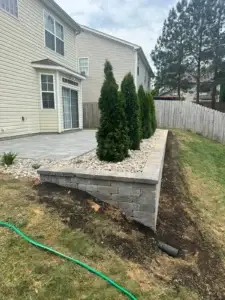
Your home’s foundation is built to carry the weight of the structure for decades, but it was never designed to sit in wet soil. In Raleigh and the surrounding Triangle area, heavy summer thunderstorms, occasional tropical downpours, and dense clay soil combine to put steady pressure on foundations. When water has nowhere to go, it finds its way toward the house. Over time, that can lead to damp crawl spaces, shifting soil, cracks, and expensive repairs.
At Mauricio’s Landscaping LLC, we’ve spent 17 years building patios, walkways, retaining walls, and drainage systems for homeowners throughout central North Carolina. Here’s how water threatens a foundation, what warning signs to watch for, and which drainage solutions protect your home most effectively.
Why Water Is the Biggest Threat to Your Foundation
Foundation problems rarely start with the foundation itself. They start with how water behaves around it. Understanding the cause makes the solution much easier to see.
- Clay soil holds water. Much of the Raleigh area sits on clay-heavy soil. Clay absorbs water slowly, drains poorly, and swells when saturated, then shrinks as it dries. That repeated expansion and contraction puts uneven pressure on foundation walls and footings.
- Hydrostatic pressure builds up. When the soil around a foundation stays saturated, the water pushes against basement walls, crawl space walls, and slabs. This pressure can force moisture through small cracks and joints.
- Roof runoff adds a lot of water fast. A single downpour can send hundreds of gallons off a roof in a short time. If downspouts empty right beside the house, all of that water soaks into the soil next to the foundation.
- Poor grading sends water the wrong way. Over the years, soil settles and landscaping changes. A yard that once sloped away from the house can slowly flatten or even slope toward it, directing runoff against the foundation instead of away from it.
Warning Signs That Water Is Already Affecting Your Foundation
Catching drainage problems early can save thousands of dollars. These are some of the most common signs that water is causing trouble around your home.
- Standing water near the house. Puddles that linger beside the foundation for a day or more after rain are a clear signal that water isn’t draining away.
- Damp or musty crawl spaces and basements. Moisture, humidity, or a persistent musty smell below the house often points to water entering from outside.
- Cracks in walls, floors, or brick. Hairline cracks can be minor, but cracks that widen, run diagonally, or appear alongside other symptoms deserve attention.
- Doors and windows that stick. When soil movement shifts a foundation even slightly, doors and windows can become harder to open and close.
- Soil pulling away or eroding at the foundation. Gullies, exposed footings, or a gap between the soil and the house suggest water is moving across or under the surface in the wrong places.
- White, chalky residue on masonry. This residue, called efflorescence, forms when water moves through brick or concrete and leaves mineral deposits behind.
If you notice cracks or signs of movement, it’s wise to have a structural professional evaluate the foundation. Fixing the drainage is what stops the cause from continuing.
Drainage Solutions That Protect Your Foundation
The right solution depends on where the water is coming from and how your property is shaped. In many cases, a combination of approaches works best.
- Regrade the soil around the house. A common guideline is for the ground to fall about 6 inches over the first 10 feet away from the foundation. Rebuilding that slope directs surface water away from the house instead of toward it.
- Extend or redirect downspouts. Downspouts should discharge several feet away from the foundation, and ideally into a buried drain line that carries water well out into the yard or to a safe outlet.
- Install a French drain. A French drain is a trench filled with gravel and a perforated pipe that collects water below the surface and carries it away. It’s an excellent fit for areas where the soil stays saturated or water collects along the side of the house.
- Add channel drains. A narrow surface drain set into a patio, walkway, or driveway captures runoff before it reaches the house. These are especially useful where paved areas meet the foundation.
- Use catch basins and dry wells. A catch basin collects water from low spots and downspouts and sends it into a drain line. A dry well gives that water a place to slowly soak into the ground away from the foundation.
- Create a swale. A gently sloped, shallow channel in the lawn can guide surface water around the house and toward a safe discharge point.
Landscaping and Hardscaping Details That Help
Drainage and landscape design work together. The patios, beds, and walls around your home can either help move water away or quietly work against you.
- Slope patios and walkways away from the house. Paved surfaces next to the foundation should pitch gently away, typically about 1 to 2 percent. A properly built base keeps that slope stable over time.
- Keep planting beds sloped. Mulch and soil beds beside the house should not trap water against the foundation. Building them up slightly near the wall and sloping them outward helps water drain away.
- Choose plants with care. Place large trees and shrubs far enough from the house that their roots and the moisture they hold aren’t a concern, and avoid heavy irrigation directly against the foundation.
- Use retaining walls with built-in drainage. On sloped lots, a retaining wall can hold back soil and redirect runoff, but it needs gravel backfill and drain pipe behind it so water doesn’t build up behind the wall.
- Choose materials that let water move. Permeable pavers and river rock borders can help rainwater soak in or flow away instead of pooling next to the house.
Keeping Your Drainage System Working
Even the best drainage system needs a little attention to keep performing, especially after the leaf-heavy fall months in North Carolina.
- Clean gutters regularly. Clogged gutters overflow and dump water right beside the foundation. Cleaning them in spring and fall keeps roof water moving through the downspouts.
- Check downspout extensions and outlets. Make sure they haven’t been knocked loose, buried, or blocked by leaves and debris.
- Watch the yard after heavy rain. Walking the property during or after a storm shows you where water travels and where it collects, which is the best way to spot developing problems.
- Keep surface drains clear. Channel drains and catch basins can collect leaves, mulch, and sediment. A quick clearing keeps them working when you need them most.
- Refresh grading when needed. Soil settles over time, so it’s worth rechecking the slope near the house every few years and adding fill where needed.
Final Thoughts
Protecting your foundation starts with controlling water. Proper grading, well-placed downspouts, and the right drain system keep rainwater moving away from your home, which helps prevent moisture problems, soil movement, and costly foundation repairs. Addressing drainage early is almost always simpler and far less expensive than repairing the damage water can cause.
At Mauricio’s Landscaping LLC, we design and build drainage systems, patios, walkways, retaining walls, pool decks, and outdoor kitchens for homeowners throughout Raleigh, Angier, Cary, Apex, Durham, and the surrounding Triangle area. Every project is custom-designed for your property, your soil, and the way water moves across your yard.
Ready to protect your home from water damage? Contact Mauricio’s Landscaping LLC today for your free estimate.
Facebook
Pinterest
Twitter
LinkedIn
Latest Post
November 6, 2026
October 23, 2026
October 15, 2026
Free Estimate
Get professional landscaping and hardscaping solutions tailored to your outdoor project needs.
Transform Your Outdoor Space With Confidence
Mauricio’s Landscaping LLC delivers professional patios, retaining walls, outdoor kitchens, and hardscaping solutions designed to enhance the beauty and functionality of your property.
At Mauricio’s Landscaping LLC, we provide patios, retaining walls, outdoor kitchens, walkways, and hardscaping services for residential and commercial properties in Angier, Raleigh, Cary, Apex, Durham, and surrounding North Carolina areas.
Navigation
Services
Copyright © 2026 Mauricio’s Landscaping LLC. Powered By Orbis Advisers