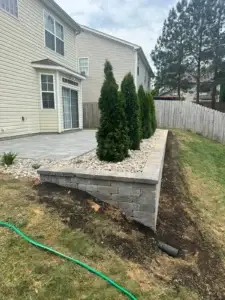
A fire pit is one of the few backyard features that works in almost every season. In the Triangle area, a cool fall evening, a crisp winter night, or an early spring gathering all feel better around a fire. For homeowners in Angier, Raleigh, Cary, Apex, Durham, and the surrounding area, the biggest decision usually isn’t whether to add a fire pit. It’s whether to build it as a gas fire feature or a traditional wood-burning pit.
At Mauricio’s Landscaping LLC, we’ve spent 17 years building patios, seat walls, and outdoor living spaces throughout central North Carolina, and fire pits are a regular part of those projects. Here’s how gas and wood-burning options compare, and what to consider before you choose.
Gas Fire Pits: Convenience and Clean Design
A gas fire pit runs on natural gas or propane and is controlled with a switch or knob. The flame sits on a burner covered with lava rock, fire glass, or ceramic logs, which gives you a clean, consistent fire without the work of building one.
- Instant, controllable flame. There’s no kindling, no waiting, and no cleanup when the evening ends. You turn it on, adjust the height, and turn it off when you’re done. For busy households, that convenience is the main reason gas is so popular.
- No smoke, sparks, or ash. Gas fires burn cleanly, so guests aren’t moving seats to dodge smoke, and there’s no ash to haul out of the pit. This also makes gas a better fit for smaller patios and yards close to neighboring homes.
- Natural gas or propane. A natural gas line provides an uninterrupted fuel supply but requires running a line to the pit, which is best planned during patio construction. Propane is more flexible and works well when a gas line isn’t practical, though the tank needs to be refilled or swapped.
- Fewer burn restrictions. Wood fires can be limited by local rules and burn bans, especially during dry periods. Gas fire features are generally treated differently, but it’s always wise to confirm local requirements before you build.
- Heat and ambiance trade-offs. Gas fires give off pleasant warmth and a steady glow, but many people feel they lack the crackle, scent, and traditional character of burning wood.
Wood-Burning Fire Pits: Tradition and Atmosphere
A wood-burning pit delivers the classic campfire experience. The sound of crackling logs, the smell of woodsmoke, and the ability to cook over the fire are things gas simply can’t fully replicate.
- Authentic experience. For many homeowners, the fire is the point. Building a fire, tending it, and gathering around it is part of the ritual, and a wood-burning pit makes that possible.
- Cooking-friendly. A wood fire is the natural choice if you want to roast marshmallows, grill over coals, or cook on a grate. Many wood-burning designs can include a cooking surface.
- Stronger, broader heat. A wood fire typically puts out more radiant heat than a comparable gas burner, which makes it a good choice for colder North Carolina nights.
- More maintenance. You’ll need a steady supply of dry, seasoned firewood, and the pit needs to be cleaned out regularly. Ash should be fully cooled before disposal.
- Smoke and local rules. Smoke can drift toward seating areas and neighboring properties depending on wind. Open burning rules vary by county and municipality, and burn bans can be issued during dry conditions, so check current local regulations before burning.
Design Styles That Work in North Carolina Backyards
Whichever fuel you choose, the design of the pit determines how it looks and how well it fits your outdoor space. Because we build fire features as part of larger hardscape projects, we can match them to your patio, seat wall, or retaining wall.
- Built-in fire pits. A pit built into the patio or surrounded by a seat wall creates a permanent, polished focal point. Using the same block or capstone as your patio or retaining walls makes the feature look intentional and cohesive.
- Square and rectangular designs. Clean, geometric fire pits suit modern homes and structured paver layouts. A linear gas burner in a rectangular surround is an especially popular contemporary look.
- Round and circular designs. Circular pits encourage conversation because everyone faces the center. They work well in open backyards and pair naturally with curved seat walls and organic patio shapes.
- Fire glass and lava rock fill. On gas pits, the burner media sets the style. Lava rock gives a natural, textured look, while fire glass adds a sleek, reflective finish in a range of colors.
- Stone and block finishes. Natural stone, tumbled block, and smooth-faced units all work well. Choose a material rated for high heat on the interior of the pit, and select exterior finishes that match your home and surrounding hardscape.
Safety, Clearance, and Placement
Where a fire pit goes matters just as much as what kind it is. Good placement keeps your family safe and makes the feature more enjoyable to use.
- Keep a safe distance from structures. Fire pits should be located well away from the house, fences, sheds, and overhanging branches. Gas fire features may have specific clearance requirements from the manufacturer, and local codes may apply.
- Consider wind direction. For wood-burning pits especially, think about the prevailing wind in your yard so smoke drifts away from seating and your home’s windows.
- Build on a stable, non-combustible surface. Pavers, natural stone, and concrete are appropriate surfaces. Avoid placing a fire pit on a wood deck or directly on grass without a proper non-combustible base.
- Plan seating and walkways. Leave comfortable room between the pit and seating, and make sure walkways to and from the fire area are clear and well lit.
- Check codes and approvals. Gas lines, fuel storage, and open burning can all be subject to local rules and permits. It’s worth confirming requirements early, before the project is underway.
Which Option Is Right for You?
The right fire pit depends on how you plan to use it and what you value most.
- Choose gas if you want convenience, clean burning, and easy use on short notice. It’s an excellent fit for entertaining, smaller yards, and homeowners who don’t want the upkeep of a wood fire.
- Choose wood-burning if you love the traditional campfire experience, want to cook over the fire, and don’t mind the extra effort.
- Consider both. Some homeowners build a gas fire feature near the patio for everyday use and add a separate wood-burning pit farther out in the yard for gatherings and cooking.
Final Thoughts
Whether you choose the convenience of gas or the character of a wood-burning fire, a well-designed fire pit becomes the center of your backyard. When it’s built as part of your patio and hardscape with proper placement and safety in mind, it adds comfort, value, and year-round enjoyment to your home.
At Mauricio’s Landscaping LLC, we design and build fire pits, patios, seat walls, retaining walls, walkways, pool decks, outdoor kitchens, and drainage systems for homeowners throughout Angier, Raleigh, Cary, Apex, Durham, and the surrounding Triangle area. Every project is custom-designed for your yard, your home’s style, and the way you want to use your outdoor space.
Ready to add a fire pit to your backyard? Contact Mauricio’s Landscaping LLC today at (919) 633-8306 for your free estimate.
Facebook
Pinterest
Twitter
LinkedIn

Latest Post
November 6, 2026

October 23, 2026
October 15, 2026
Free Estimate
Get professional landscaping and hardscaping solutions tailored to your outdoor project needs.
Transform Your Outdoor Space With Confidence
Mauricio’s Landscaping LLC delivers professional patios, retaining walls, outdoor kitchens, and hardscaping solutions designed to enhance the beauty and functionality of your property.
At Mauricio’s Landscaping LLC, we provide patios, retaining walls, outdoor kitchens, walkways, and hardscaping services for residential and commercial properties in Angier, Raleigh, Cary, Apex, Durham, and surrounding North Carolina areas.
Navigation
Services
Copyright © 2026 Mauricio’s Landscaping LLC. Powered By Orbis Advisers