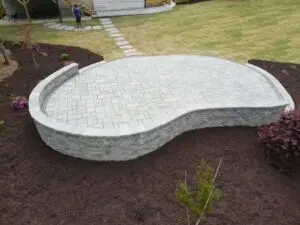
Installing a pool deck is one of the most significant outdoor investments a homeowner can make — and like any major project, the work that happens before the first paver is set largely determines how well the finished surface performs over time. For homeowners in Raleigh, Angier, Cary, Apex, Durham, and the wider Triangle area, understanding what the planning and installation process actually looks like helps avoid surprises, set realistic expectations, and make better decisions at every stage.
At Mauricio’s Landscaping LLC, we’ve spent 17 years designing and installing pool decks throughout central North Carolina. Here’s a straightforward look at what planning your pool deck from the ground up involves — and what to expect at each phase.
Start With the Site: Assessing What You’re Working With
Before any design decisions are made, the site itself needs to be evaluated thoroughly. The existing conditions of your yard — grade, drainage patterns, soil type, and proximity to the pool shell — all directly affect how the deck is designed, what materials are specified, and how the base is built.
- Grade and slope. The ground around a pool is rarely perfectly flat. Any existing slope needs to be accounted for in the deck design — both for drainage purposes and to ensure the finished surface reads level and cohesive rather than fighting the natural terrain. In some cases, minor grading work is needed before the base can be properly prepared.
- Drainage patterns. Understanding where water flows during a rainstorm — and where it tends to collect — is essential before a pool deck is installed. A deck that traps water against the pool shell or channels it toward the house foundation creates problems that are expensive to correct after the fact.
- Soil conditions. Expansive clay soils — common throughout the NC Piedmont — require a properly compacted and graded aggregate base to prevent settling and shifting after installation. Skipping base preparation in clay-heavy soil is one of the most common causes of pool deck problems we see.
- Pool shell status. If the pool is already in the ground, the deck design needs to work around the existing coping, plumbing access points, equipment pads, and any elevation changes between the pool deck level and surrounding yard. If the pool and deck are being installed simultaneously, the sequencing of work between the pool contractor and the hardscaping crew needs to be coordinated carefully.
Design Phase: Layout, Material, and Pattern Selection
Once the site has been assessed, the design phase begins — and this is where the decisions that most affect the finished look and long-term performance of the deck are made.
- Deck size and layout. The deck area around a pool should be generous enough to accommodate furniture, traffic flow, and safe movement around the water’s edge without feeling cramped. As a general rule, the deck area surrounding the pool should be at least as large as the pool surface itself — and ideally larger in the areas where seating and entertaining will happen.
- Material selection. The Triangle area’s climate — hot, humid summers, occasional winter freezes, and significant rainfall — narrows the field of ideal pool deck materials. Concrete pavers, travertine, and porcelain tile are the strongest performers in NC conditions. Each has a different price point, aesthetic, and maintenance profile. Concrete pavers offer the widest range of colors and textures at the most accessible price point. Travertine delivers a warm, natural look with excellent heat-dissipation properties underfoot. Large-format porcelain offers a contemporary appearance with virtually zero maintenance requirements.
- Pattern and color. The layout pattern — running bond, stacked, herringbone — and the color tone of the pavers both affect how the finished deck reads visually. Lighter tones stay cooler underfoot in direct summer sun and make the pool water appear more vibrant. Larger format pavers in a clean stacked or running bond pattern read as more contemporary and spacious. The pattern should complement the shape of the pool and the style of the home rather than compete with either.
- Coping. The coping — the cap edge that finishes the perimeter of the pool and transitions to the deck surface — should be selected as part of the overall material package, not as an afterthought. Matching or complementary coping that flows naturally into the deck surface is what gives a pool surround its finished, intentional quality.
Base Preparation: The Work That Happens Before You See Anything
The most important phase of any pool deck installation is also the least visible one — the base preparation that happens beneath the finished surface. A pool deck that looks beautiful on day one but settles, shifts, or cracks within two or three years is almost always the result of inadequate base work, not a material failure.
- Excavation to the correct depth. The existing soil beneath the deck area is excavated to the depth required for the specified base material, typically 6–8 inches below the intended finished surface elevation for a paver or stone installation.
- Compacted aggregate base. A layer of crushed stone aggregate — typically 4–6 inches — is spread and compacted in lifts using a plate compactor. This base layer distributes the load of the deck surface and provides the stable, well-drained foundation that prevents settling over time. In NC’s clay-heavy soils, this step cannot be shortcut.
- Bedding layer. A 1-inch layer of coarse sand or stone dust is screeded smooth over the compacted aggregate base. This bedding layer provides the final level surface on which the pavers or stone are set and allows for minor elevation adjustments before the surface material is placed.
- Edge restraints. Rigid plastic or metal edge restraints are installed around the perimeter of the deck area before pavers are set. These restraints lock the outer edge of the installation in place and prevent the paver field from spreading or shifting outward over time — a critical detail around a pool where the edge condition sees constant foot traffic and water exposure.
Installation and Finishing: What the Final Phase Looks Like
With the base prepared and materials on site, the installation phase moves relatively quickly — though the pace depends on the size of the deck, the complexity of the pattern, and how many cuts and transitions the design requires.
- Setting the field. Pavers or stone are set by hand on the screeded bedding layer, working outward from a fixed reference line. Spacers or pattern guides maintain consistent joint width throughout the field. Any cuts required at the pool coping edge, around equipment pads, or at the yard perimeter are made with a wet saw on site.
- Transition to the pool coping. The joint between the pool deck surface and the pool coping is one of the most detail-sensitive parts of the installation. A clean, consistent joint here — filled with the appropriate sealant or joint material — is what separates a professionally finished pool deck from one that looks assembled rather than designed.
- Joint sand installation. Once the full paver field is set and all cuts are complete, polymeric joint sand is swept into the joints between pavers and compacted with a plate compactor to lock the individual units together. Polymeric sand resists washout from rain and pool splash better than standard joint sand — essential around a pool deck where water volume across the surface is significant.
- Final compaction and cleanup. A final pass with the plate compactor seats the pavers firmly into the bedding layer and ensures consistent surface plane across the entire deck. Excess joint sand is cleaned from the surface, and the finished deck is ready for use.
Final Thoughts
Planning a pool deck the right way — with a thorough site assessment, deliberate material and layout decisions, and properly executed base preparation — is what produces a surface that holds up through NC’s seasons and still looks exactly right ten years from now. Skipping any part of that process creates problems that cost far more to correct than they would have to prevent.
At Mauricio’s Landscaping LLC, we handle every phase of pool deck planning and installation in-house — from the initial site visit and design consultation through base preparation, installation, and final cleanup. We serve homeowners throughout Raleigh, Angier, Cary, Apex, Durham, and the surrounding Triangle area.
Ready to design a pool and spa surround that feels like one cohesive project?
Facebook
Pinterest
Twitter
LinkedIn
Latest Post
September 25, 2026
September 18, 2026
September 11, 2026
Free Estimate
Get professional landscaping and hardscaping solutions tailored to your outdoor project needs.
Transform Your Outdoor Space With Confidence
Mauricio’s Landscaping LLC delivers professional patios, retaining walls, outdoor kitchens, and hardscaping solutions designed to enhance the beauty and functionality of your property.
At Mauricio’s Landscaping LLC, we provide patios, retaining walls, outdoor kitchens, walkways, and hardscaping services for residential and commercial properties in Angier, Raleigh, Cary, Apex, Durham, and surrounding North Carolina areas.
Navigation
Services
Copyright © 2026 Mauricio’s Landscaping LLC. Powered By Orbis Advisers