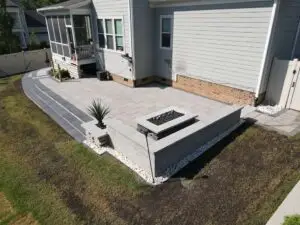
Not every walkway needs to be a solid surface of wall-to-wall pavers. One of the most visually striking — and surprisingly practical — walkway styles gaining popularity throughout Raleigh, Angier, Cary, Apex, Durham, and the Triangle area is the combination of large-format stepping stone pavers set into a bed of river rock or pea gravel. The result is a clean, contemporary look that’s low-maintenance, excellent for drainage, and works beautifully in spaces where a traditional solid walkway would feel too heavy or formal.
At Mauricio’s Landscaping LLC, we design and install paver and river rock walkways throughout central North Carolina for homeowners who want something functional, durable, and distinctly modern. Here’s everything you need to know about creating this style of walkway on your property.
Why Pavers and River Rock Work So Well Together
The pairing of large flat stepping stones and river rock or pea gravel isn’t just about aesthetics — it’s a combination that solves several practical landscaping challenges at once.
- Drainage. River rock between pavers allows rainwater to percolate down into the soil rather than running off the surface — a significant advantage in NC’s rainy seasons and a natural fit for side yards and narrow passages where water tends to collect.
- Low maintenance. Unlike a solid paver walkway that needs periodic joint sand refresh and resealing, a paver-and-gravel walkway requires very little upkeep. The river rock stays in place, resists weeds when installed over a quality landscape fabric, and never needs resealing.
- Visual weight. A solid paver walkway in a narrow side yard or tight passage can feel heavy and tunnel-like. Stepping stones set into gravel feel open, light, and intentional — the negative space between the pavers becomes part of the design.
- Versatility. This walkway style works in front yards, side yards, backyard passages, garden paths, and utility corridors — anywhere you need to define a clear path without committing to a full hardscape installation.
- Cost efficiency. Using river rock to fill the space between stepping stones reduces the total number of pavers needed, which can make this style more budget-friendly than a solid paver walkway of the same linear footage.
Choosing the Right Stepping Stone Pavers
The pavers you choose set the entire tone of a river rock walkway. Size, color, and finish all matter.
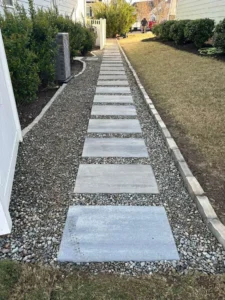
- Go large. Large-format pavers — 18×18, 24×24, or even larger — are the defining feature of a modern stepping stone walkway. Small pavers set into gravel look busy and lack the clean, confident visual impact of a large slab. The substantial stepping stones we install throughout the Triangle area in gray and silver tones are a perfect example of how size elevates the entire design.
- Choose a smooth or lightly textured finish. Unlike a standard paver walkway where texture provides grip across the entire surface, stepping stone pavers benefit from a cleaner face that contrasts visually with the rough texture of the surrounding river rock. A light broom or brushed finish provides enough traction without competing with the gravel.
- Neutral tones read best. Gray, silver, charcoal, buff, and cream pavers all work beautifully alongside river rock — neutral tones let the material combination speak for itself rather than competing with the surroundings. Avoid very dark pavers in full sun, which absorb heat significantly in NC summers.
- Consistent sizing throughout. Using one uniform paver size for the entire walkway creates the clean, deliberate look that defines this style. Mixing sizes introduces visual complexity that works against the minimalist aesthetic.
Choosing the Right Gravel or River Rock
The fill material between the pavers is just as important as the pavers themselves — it determines the texture, color, and drainage performance of the finished walkway.
- River rock (smooth, rounded stone, typically ¾ to 1½ inch) is the most popular choice for this walkway style in the Triangle area. Its naturally rounded edges are comfortable underfoot if a foot slips off a stepping stone, and the varied natural coloring — grays, tans, and whites — complements virtually any paver tone.
- Pea gravel (small, rounded, typically ⅜ inch) offers a finer texture and a softer visual impression than river rock. It fills the space between pavers more densely and creates a slightly more formal look — a good choice when the stepping stones are very large and the contrast between stone sizes is a design feature.
- Decomposed granite is a more compacted option that stays put better underfoot and has a warmer, earthier tone. A good choice for walkways with heavier foot traffic or for homeowners who prefer a more stable fill that doesn’t shift underfoot.
- Match gravel tone to pavers and surroundings. Light gray pavers pair naturally with mixed river rock or white pea gravel; warm buff or sandstone pavers work better with tan or gold-toned gravel; charcoal pavers can handle both light and dark gravel depending on the surrounding landscape.
Layout and Spacing: Getting the Stepping Stone Rhythm Right
Spacing the stepping stones correctly is one of the most important — and most often misjudged — elements of this walkway style.
- Match the spacing to a natural walking stride. The center-to-center distance between stepping stones should correspond to a comfortable walking pace — typically 18 to 24 inches for most adults. Too close and the walkway looks cramped; too far apart and it becomes awkward to navigate.
- Keep spacing consistent throughout. Irregular spacing between stepping stones creates a visual stutter that undermines the clean, modern feel. Consistent spacing gives the walkway a deliberate, designed rhythm.
- Allow the gravel to breathe. The gap between each stepping stone should be wide enough that the river rock between them reads clearly as a design element — not just a gap filler. Typically 4 to 8 inches of visible gravel between pavers strikes the right balance.
- Align pavers cleanly. In a modern, minimalist walkway, the stepping stones should run in a straight, perfectly aligned line — any deviation reads as an error rather than an intentional design choice. Use string lines during installation to keep alignment sharp from end to end.
Installation Essentials: What Goes Under the Surface
The quality and longevity of a paver-and-river-rock walkway depend heavily on what happens beneath the visible surface.
- Excavate to the right depth. Remove enough soil to accommodate a compacted gravel base (typically 4–6 inches), a layer of coarse sand for the stepping stones, and the paver thickness itself — plus the river rock depth on top.
- Install landscape fabric. A quality woven landscape fabric beneath the river rock layer is essential for weed suppression. Without it, weeds push up through the gravel within a single growing season. The fabric should extend beneath the stepping stones as well as the gravel fill.
- Set stepping stones on a stable sand bed. Each stepping stone should be set individually on a compacted sand layer and leveled carefully — both side to side and with a slight pitch to drain water. A stone that rocks or wobbles underfoot is a safety hazard and will shift further over time.
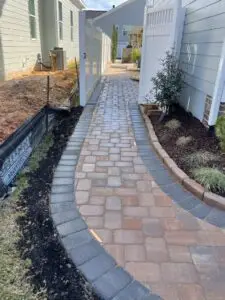
- Install edge restraints. Solid paver edging along both sides of the walkway contains the river rock, prevents lateral spreading into the lawn or planting beds, and gives the walkway a clean, defined boundary. The paver border edging visible on both sides of the side yard walkways we build throughout the Triangle area is a perfect example of how this detail elevates the finished product.
- Compact the base thoroughly. A properly compacted gravel base prevents settling and keeps individual stepping stones from sinking unevenly over time — the most common failure point in DIY stepping stone installations.
Where This Walkway Style Works Best in NC Yards
The paver-and-river-rock combination is one of the most versatile walkway styles available, but it excels in specific situations:
- Side yards. Narrow passages along the side of the house between the structure and a fence or property line are ideal for this style. The open, airy feel of stepping stones in gravel avoids the tunnel effect a solid walkway would create in a tight space.
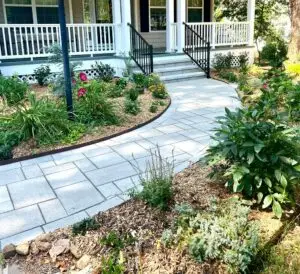
- Garden paths. A stepping stone walkway through a landscaped garden or planting area feels natural and intentional — the river rock complements mulched beds and the open spacing lets plants grow close to the path without encroaching on it.
- Utility corridors. Paths to HVAC units, hose bibs, gates, or side entrances benefit from this style because it defines the path clearly, manages drainage near mechanical equipment, and does so without the cost or permanence of a full paver installation.
- Low-traffic accent paths. For secondary paths that see occasional foot traffic, the stepping stone approach is perfectly functional and far more visually interesting than a solid alternative.
Build Your Modern Walkway With Mauricio’s Landscaping LLC
At Mauricio’s Landscaping LLC, we’ve spent 17 years designing and building paver walkways, stepping stone paths, retaining walls, patios, seat walls, outdoor kitchens, pool decks, and drainage systems for homeowners throughout Angier, Raleigh, Cary, Apex, Durham, and the surrounding Triangle area. Every walkway we build — from a simple side yard stepping stone path to a sweeping curved front entry — is custom-designed for your yard, your home’s style, and your long-term maintenance goals.
Ready to create a cleaner, more modern path through your yard?
Contact us today or call (919) 633-8306 for your free estimate.
Facebook
Pinterest
Twitter
LinkedIn

Latest Post
September 11, 2026

Free Estimate
Get professional landscaping and hardscaping solutions tailored to your outdoor project needs.
Transform Your Outdoor Space With Confidence
Mauricio’s Landscaping LLC delivers professional patios, retaining walls, outdoor kitchens, and hardscaping solutions designed to enhance the beauty and functionality of your property.
At Mauricio’s Landscaping LLC, we provide patios, retaining walls, outdoor kitchens, walkways, and hardscaping services for residential and commercial properties in Angier, Raleigh, Cary, Apex, Durham, and surrounding North Carolina areas.
Navigation
Services
Copyright © 2026 Mauricio’s Landscaping LLC. Powered By Orbis Advisers